Video Resumes in 2026: Do They Work?
TL;DR
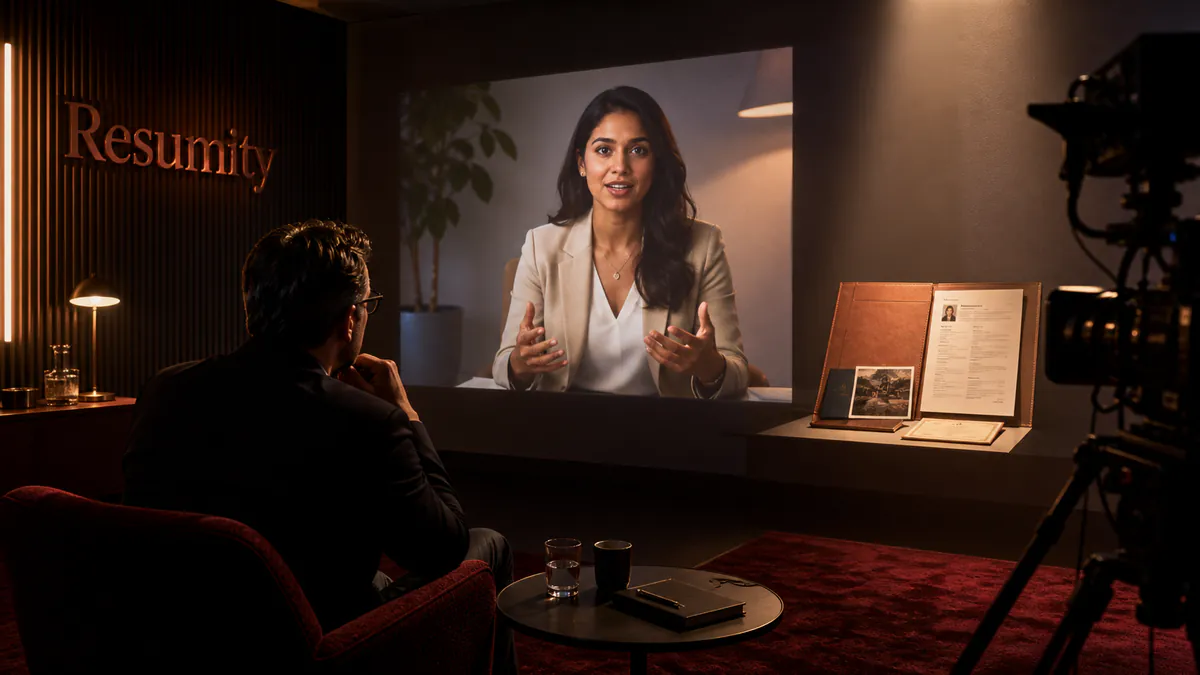
Video resumes and Loom intros are trending on Reddit and LinkedIn as a way to stand out from crowded applicant piles. The honest answer: video can help in some contexts and backfire in others. Here is when to use one, when to avoid it, and how to make it land.
The Video Resume Trend
In 2026, candidates are doing something new: recording 60-second video intros and sending them alongside their resumes.
Platforms like Loom, Vidyard, and even LinkedIn native video make this frictionless. The pitch is compelling: in a sea of text-based applications, a human face and voice cut through the noise.
But does it actually work?
There is no solid, recent study that answers that for every employer. What recruiters and hiring managers say in public commentary points to a split: it depends heavily on the company and the role.
Where Video Tends to Help, and Where It Hurts
When Video Resumes Help
Contexts where a short video is more likely to be welcome:
- Creative roles (design, video, content)
- Startups and small companies
- Sales and customer-facing roles
- Remote roles (to show communication skills)
Why it can work:
- It shows quickly whether you communicate clearly
- It signals effort, because most candidates do not send one
- For creative roles, the video itself can be a portfolio piece
When Video Resumes Hurt
Contexts where video is more likely to be ignored or unwelcome:
- Large enterprises with high application volume
- Highly structured, ATS-driven processes
- Hiring processes designed to reduce bias
- Any time the video is poorly produced
Why it can backfire:
- Many applicant tracking systems do not accept video files, so the recruiter may not be able to open it
- Some hiring managers are uncomfortable judging appearance before skills, and some employers avoid video to limit bias
- A rambling or badly lit video can leave a worse impression than no video at all
The Rules: How to Make a Video Resume That Works
Rule 1: Keep It Under 90 Seconds
Hiring managers will not watch a 5-minute video. Ever. The sweet spot is 60–90 seconds.
Structure:
- 0:00–0:10: Name, role you are applying for, and one hook.
- 0:10–0:45: Your most relevant achievement (quantified).
- 0:45–1:15: Why you are excited about this company/role.
- 1:15–1:30: Call to action — "I would love to discuss how I can contribute."
Rule 2: Script It, But Do Not Read It
Write a script. Practice it 5 times. Then record without reading. You should sound prepared, not robotic.
Rule 3: Production Quality Matters (A Little)
You do not need a studio. You need:
- Good lighting (face a window or use a ring light)
- Clear audio (use headphones with a mic if needed)
- A clean background (no laundry piles, no distracting posters)
- Eye contact with the camera
A well-lit, well-audio'd video shot on a phone beats a professionally produced video that feels scripted and fake.
Rule 4: Never Replace the Resume
Video is a supplement, not a substitute. Send your standard resume. Attach the video as a bonus.
Good subject line: "Application for [Role] — [Name] + 60-sec intro"
Rule 5: Match the Culture
If the company is a buttoned-up bank, a casual video might hurt you. If the company is a startup with emojis in their job descriptions, a stiff video might seem out of touch. Research the culture first.
When to Send a Video Resume (and When Not To)
Send One If:
- You are applying to a startup or small company
- The role is creative, sales, or customer-facing
- You have a specific achievement you can explain better in video than text
- You are applying to a remote role and want to show communication skills
- The job posting explicitly welcomes creative applications
Do NOT Send One If:
- The company uses a rigid ATS (your video will be ignored)
- The role is in a conservative industry (finance, government, healthcare)
- You are not confident on camera (it will show)
- You do not have time to produce something decent (a bad video is worse than none)
- You are applying to a large enterprise (recruiters have no bandwidth to watch)
FAQ
What is a video resume?
A video resume is a short recorded introduction (usually 60–90 seconds) that accompanies your traditional resume. It allows you to introduce yourself, highlight a key achievement, and express enthusiasm for the role in a more personal format.
Do hiring managers actually watch video resumes?
It depends on the company. Startups and small companies are more likely to watch them. Large enterprises with rigid ATS processes often do not. Always research the company culture before sending one.
How long should a video resume be?
60–90 seconds maximum. Hiring managers will not watch longer. The ideal structure is: hook (10 sec), key achievement (35 sec), why this company (30 sec), call to action (15 sec).
What should I say in a video resume?
Introduce yourself, mention the specific role, share one quantified achievement that is relevant to the job, explain why you are excited about the company, and close with a call to action. Do not read your resume aloud.
Should I send a video resume for a software engineering role?
It depends on the company type. Startups and remote-first companies appreciate them. Large enterprises with structured ATS processes usually ignore them. If you do send one, focus on communicating complex ideas clearly — that is the skill you are demonstrating.
Is a Loom video better than a traditional video resume?
Loom videos are often better because they feel casual and authentic. A 60-second Loom recorded in your browser feels less produced and more personal than a heavily edited video. For most candidates, a simple Loom is the right choice.
Can a video resume hurt my chances?
Yes. A poorly produced video (bad audio, rambling, unprofessional background) can hurt you more than no video at all. Additionally, some hiring managers worry about unconscious bias when evaluating candidates on appearance and voice before reviewing qualifications.
What tools should I use to make a video resume?
Loom (free, easiest), Vidyard (professional tracking), your phone camera (simplest), or Zoom (record yourself). The tool matters less than the content. Focus on clarity, brevity, and authenticity.
Bottom Line
Video resumes are not a magic bullet. They are a high-risk, high-reward tool that works in specific contexts and fails in others.
Use a video resume if:
- The company is small, startup, or creative.
- You can produce something polished in under 90 seconds.
- You have a story that is better told than written.
Skip the video if:
- The company is a large enterprise with a rigid ATS.
- You are not comfortable on camera.
- You cannot produce decent audio and lighting.
The candidates who get hired are not the ones with the flashiest video. They are the ones who match the medium to the moment — and make every second count.
Sources & methodology
This article is general guidance drawn from public recruiting-industry commentary on video resumes. Resumity did not survey hiring managers. An earlier version described a survey of 50 hiring managers, with approval percentages and attributed quotes, that could not be substantiated; those have been removed (October 9, 2026). Acceptance of video resumes varies sharply by company size, role type, and ATS maturity, so check what your target employers say before sending a video.
Ready to put this advice to work?
Check whether software can read your resume, free and with no sign-up. Matching it against a job description needs a free account.
Score My Resume